
An animal's finances and ROI
The animal's Finance tab brings together only the money and values connected to that animal. Use it to answer what you spent, what the animal earned, and how its current planning value compares with its recorded start. ROI means return on investment, but Creatures keeps profitability, return, and cost recovery separate instead of presenting one generic ROI number.
Read the headline figures
Open the animal and choose Finance. The top row shows Income, Expenses, Purchase price or Starting value, Remaining starting value, and Profit so far when those figures are available.
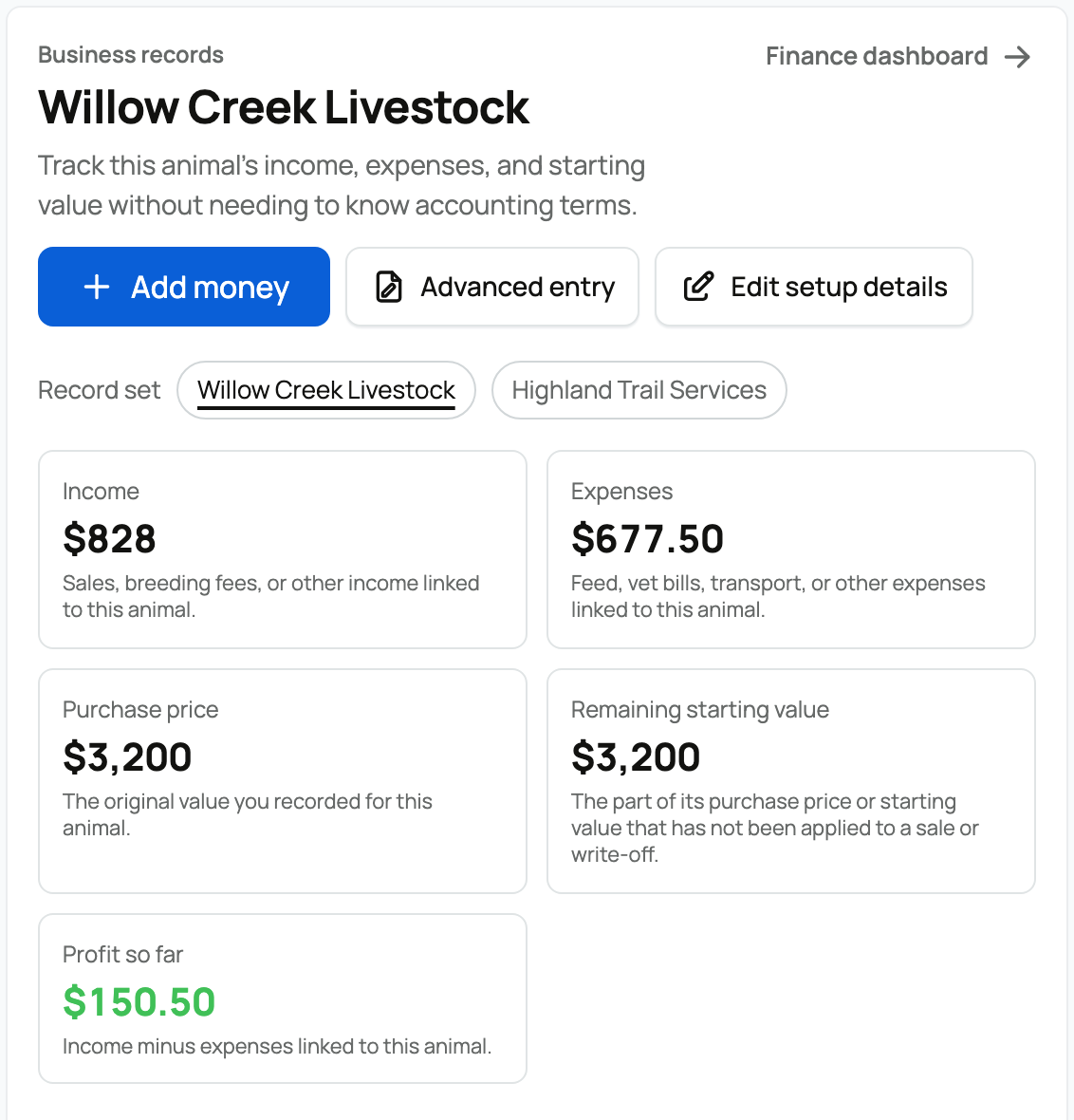
Income and expenses include entries connected to this animal. Profit so far is that income minus those expenses. The purchase price is not deducted again just because it appears here, although costs already applied to a sale or write-off can be included in expenses.
Use Add money from this tab to connect an entry to the animal, or Advanced entry when you need more detail or paperwork.
Keep current value separate from the books
The Management value panel shows the figure Creatures uses for planning. Its source can be your management value, an eligible Crestimate, Creatures' data-based estimate of current market value, or recorded cost basis. Select Set management value or Edit management value to enter your current estimate and valuation date.
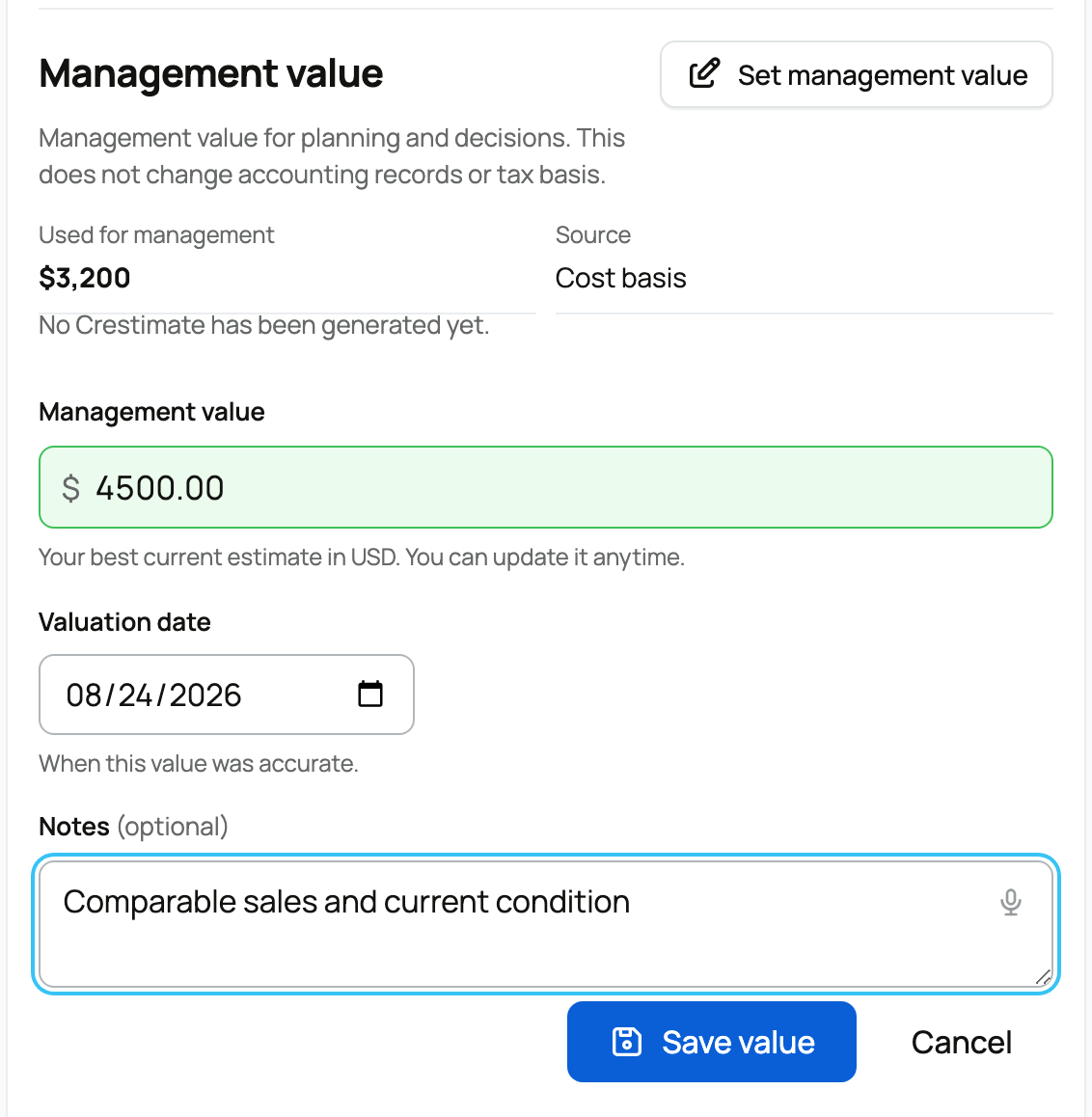
A management value never changes cost basis, depreciation, tax records, or saved income. If your value differs from an eligible Crestimate by more than 20% of that Crestimate, Creatures can offer Use Crestimate. Nothing changes until you choose it. Use Crestimate or cost basis clears your manual figure and returns to the available fallback.
Understand breeding profitability
For a breeding animal, or one with linked offspring or finance activity, Breeding profitability can combine direct revenue and costs for the parent and offspring. Read its three results separately:
- Net from breeding is recorded parent and offspring revenue minus their recorded direct costs. It is the dollar profitability result for the linked activity.
- Return on direct costs divides that net result by recorded direct costs. It is a percentage return on the costs included in the calculation, not on the animal's purchase price.
- Cost recovered divides the same net result by the recorded purchase price. It shows how much of that original cost the breeding result has recovered; it is not cash on hand or remaining book value.
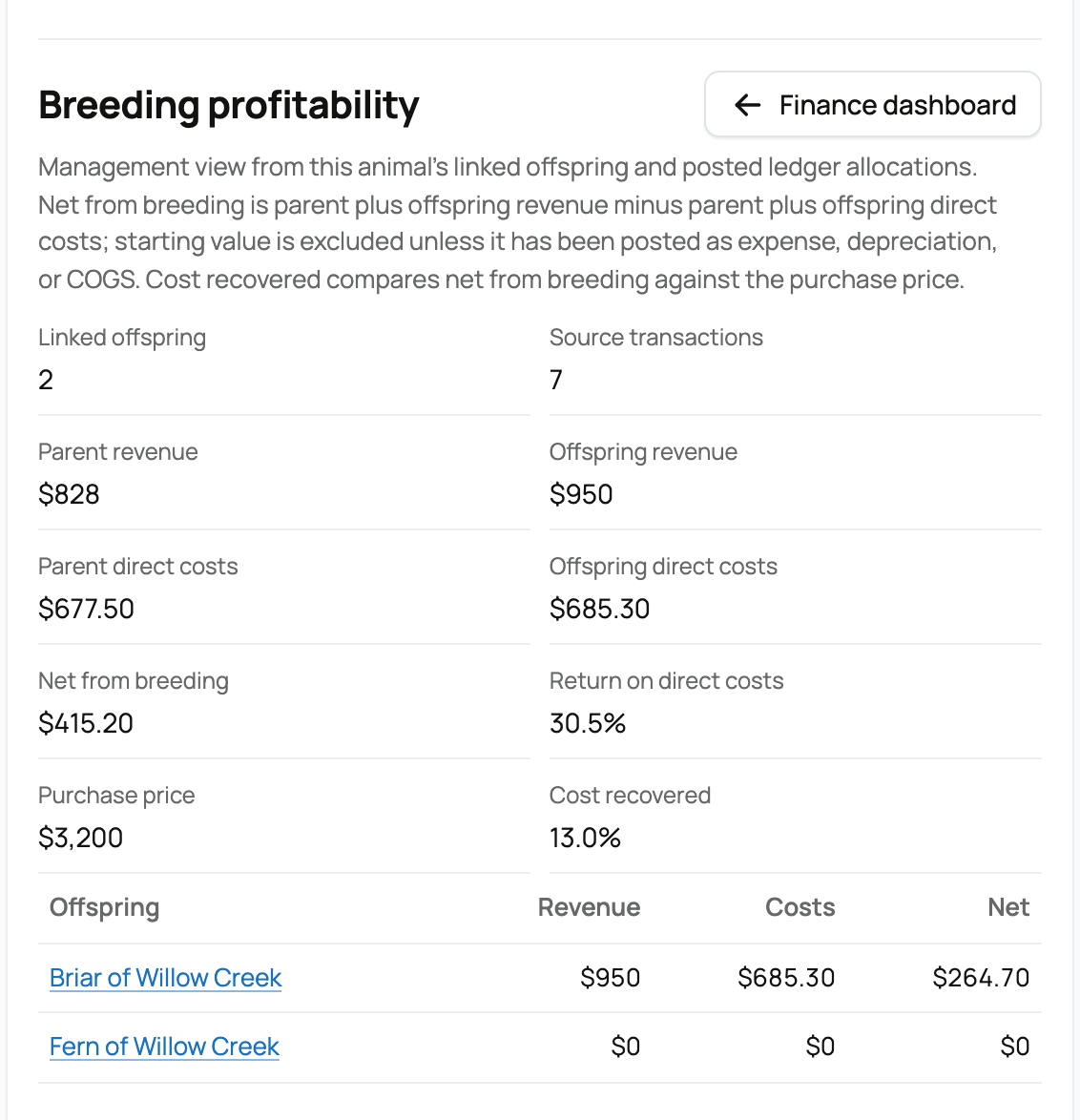
These figures depend on pedigree links and entries connected to the correct animals. “Not enough data yet” means the required relationships or money records are missing, not that the animal had no financial activity.
Open an income or expense row to inspect its source before relying on the total. If an entry belongs to a different animal, correct the underlying Finance record rather than adding an offsetting duplicate.
Related information
- Recording money in and out
- Animal cost basis and starting values
- Reviewing and updating your animal values
Updated on: 03/09/2026
Thank you!