
Reviewing and updating your animal values
Use Inventory valuation to review current planning values across all animals in one record set. The page keeps market estimates separate from book values so updating what an animal may be worth does not silently rewrite your records.
Compare the value sources
From the Finance dashboard, choose Review current values or Add animal values. Each row shows Book value, Crestimate (Creatures' data-based estimate of current market value), Manual value, and Used for management.
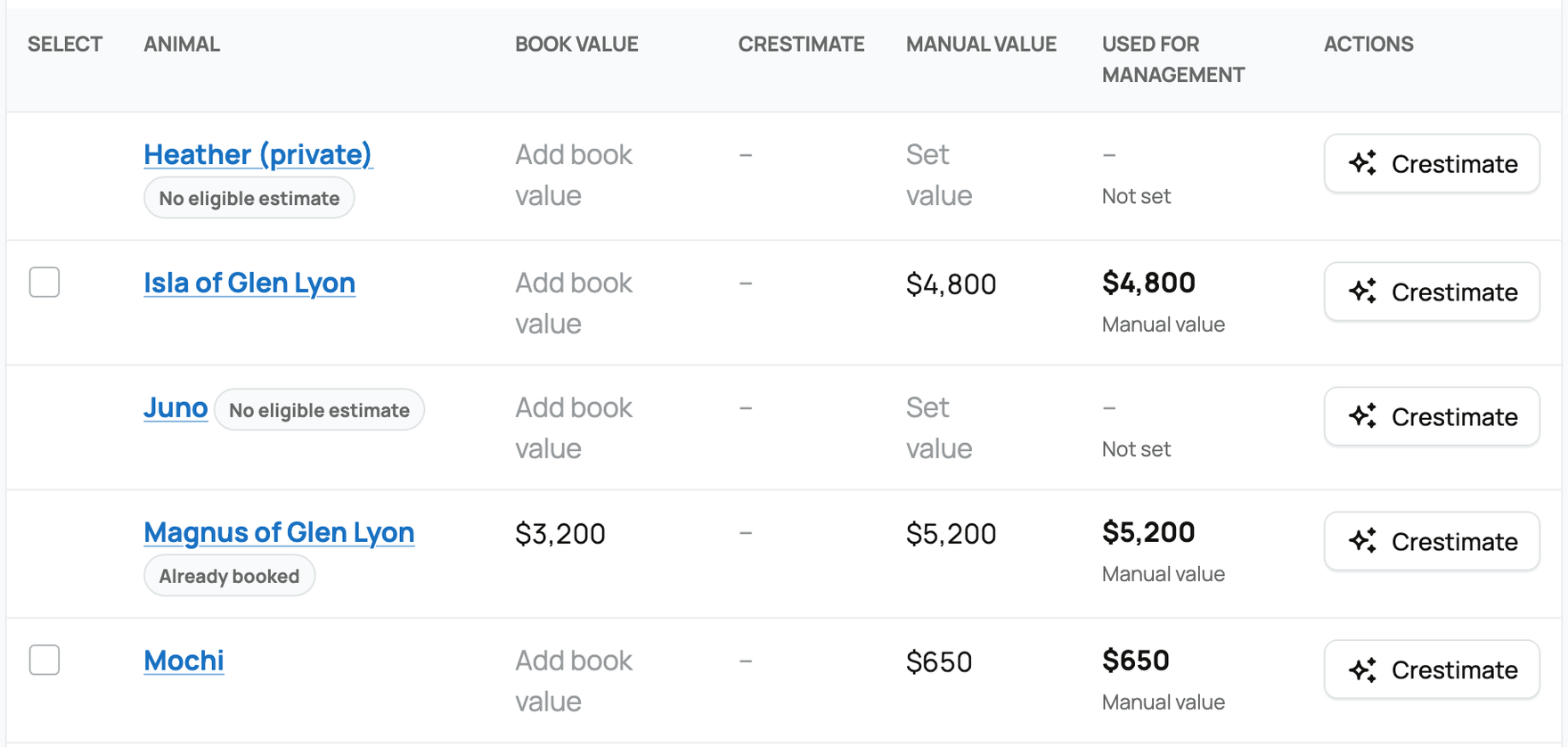
- Book value is the recorded historical value still being tracked.
- Crestimate is Creatures' market estimate when enough comparable information exists.
- Manual value is the current planning estimate entered by an owner.
- Used for management shows which available source is being used now.
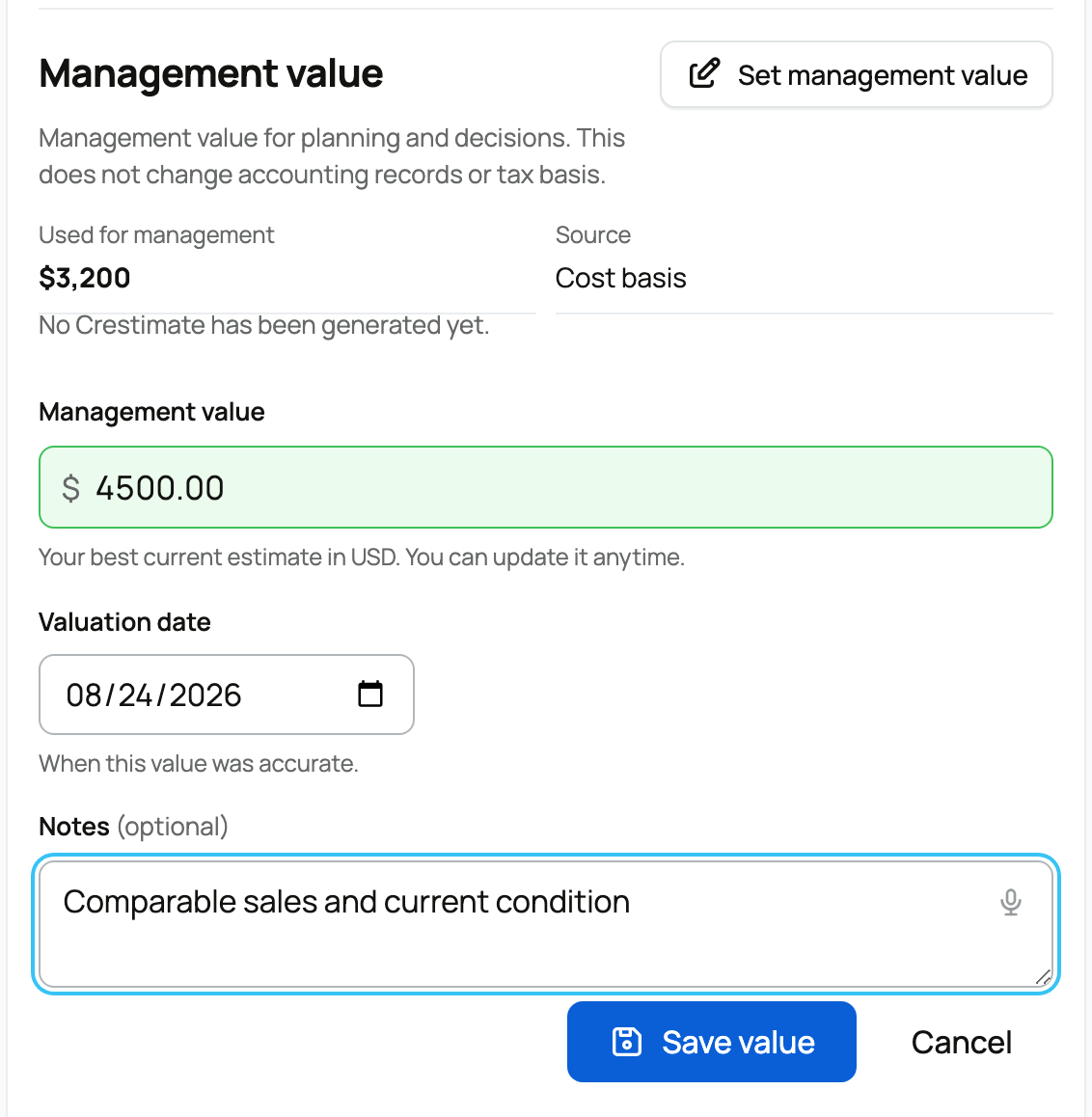
Select the edit action beside Manual value to enter an amount; its valuation date is recorded as today. To choose a specific date, use the animal's Finance tab. Use the row's Crestimate action to refresh one eligible animal, or Estimate current values to request updates across the visible set. Animals missing required profile details stay disabled and explain what needs to be added.
Find values that need attention
Use 20%+ from estimate to focus on manual values that have moved far from an eligible Crestimate. Show inactive includes animals no longer currently owned or active. A difference is a review prompt, not an automatic change.
The same management-value controls appear on an animal's Finance tab. Setting or clearing a planning value there updates what this table uses, but it does not change accounting records, depreciation, or tax basis.
Add a missing opening book value
Owners may see a selection control for animals that have a manual value or eligible Crestimate but no starting book value. Select only the animals you intend to record. The review button shows the count, such as Review 1 book value.
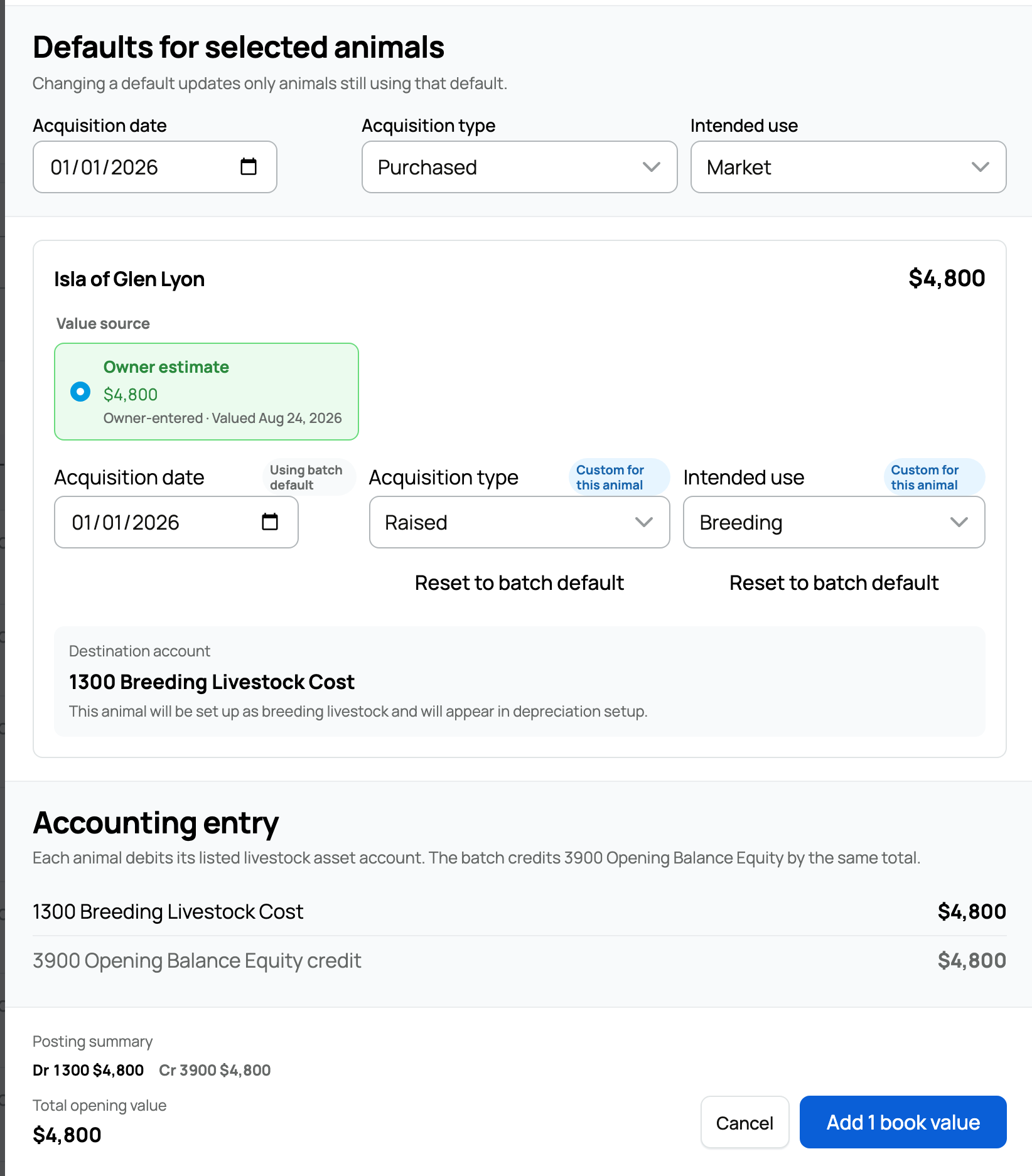
Review the source, acquisition date, acquisition type, and intended use for every animal. Confirming Add 1 book value, or the button for your selected count, creates opening entries in Finance. Closing the review or merely calculating estimates changes nothing in the books.
Use management values for planning and book values for historical records. If you are not sure an estimate belongs in the books, leave it as a management value and ask your accountant.
Related information
- Understanding your finance dashboard
- Animal cost basis and starting values
- The management balance sheet
- An animal's finances and ROI
Updated on: 03/09/2026
Thank you!