
Recording births and creating a litter
Record a birth or hatch to connect the outcome, offspring group, and individual profiles. If you already track the pregnancy, start from its active cycle; you do not need to recreate a missing breeding record before recording a birth.
Record what arrived
- Open the dam's Breeding tab.
- Choose the species-appropriate Record action on the active cycle.
- Enter the actual Date and confirm the breeding cycle under Keep the birth and the babies connected.
- For a live birth, check Birth parent. For an embryo recipient, choose This animal carried an embryo from another mother so the birth parent is kept separate from biological parentage.
- Under What was born?, enter Born alive and Stillborn. For a hatch, complete What hatched? with the counts you know.
- Review the privacy choice and choose Save Record.
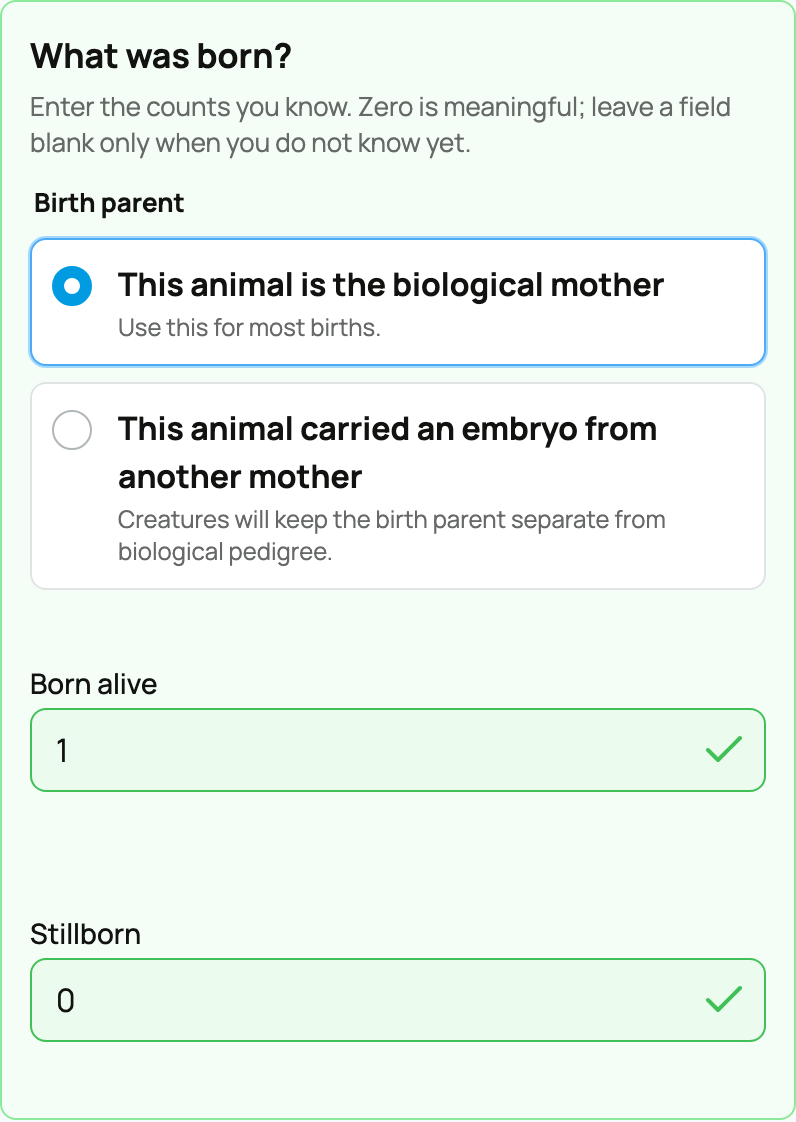
Use zero when the known count is zero, and leave a count blank when it is unknown. For a hatch, enter Hatched and Failed eggs; their total cannot exceed a recorded clutch size. Turn on Hatching is complete only when no more eggs may hatch. It is required for a hatch without an existing cycle. A completed outcome closes the active cycle and removes it from the expecting list.
No tracked cycle? Open Add record, choose Breeding & Reproduction, and select the birth or hatch category. The outcome can become the connected starting point.
Continue with the group Creatures made
Completing an outcome with Born alive or Hatched greater than zero creates a private offspring group, or updates the group already connected to the cycle. It keeps the outcome and living count together. A partial hatch does not create the born group yet. You do not need to create a second group after completing the outcome.
The success screen offers the next actions:
- Create calf profile for one live calf, or Create profiles when more than one offspring is ready to identify.
- Open calf crop, or the equivalent group name shown for the species, to manage the offspring together.
You can leave the profiles for later without losing the connection. From the completed cycle on the dam's Breeding tab, use Create profile or Create profiles, or choose Open followed by the connected group's name. On the group's overview, Promote profiles opens the same profile-creation workflow.
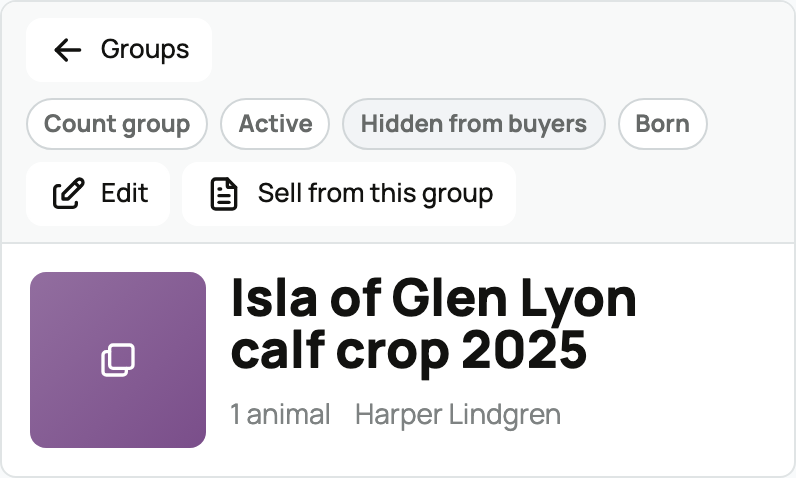
Use the born group while you manage the offspring together. Creating a profile moves one tracked place into an individual animal; it does not create an extra offspring.
If you created a planned expected group before the birth, the form may offer Use an existing planned group. Choose it only when that group truly represents this outcome. Otherwise, let Creatures make the born group automatically. The expected-group choice is planning support, not a required step after every birth.
Parentage follows the evidence on the breeding. A confirmed, linked sire can carry through as confirmed; a pen or colony breeding may keep several possible parents. Review that information when creating profiles. An off-platform name alone is not a confirmed parent profile.
If the pregnancy ended without a live birth or hatch, record the truthful outcome. Creatures does not create a born group when the living count is zero. Do not leave the cycle active, because that keeps it on the dashboard and leaves projected reminders open.
Next: Track animals together with count groups or review the breeding dashboard.
Updated on: 03/09/2026
Thank you!