
Genetics overview
Creatures keeps straws, embryos, eggs, and other breeding material connected to the animals they came from. You can see what is available, record what was sold or used, list material for sale, and follow stored or shipped purchases without maintaining a separate spreadsheet.
Start from your genetics dashboard
Open Genetics from your dashboard. The summary shows Inventory items, Total units, Listed items, and whether any items are low on stock.
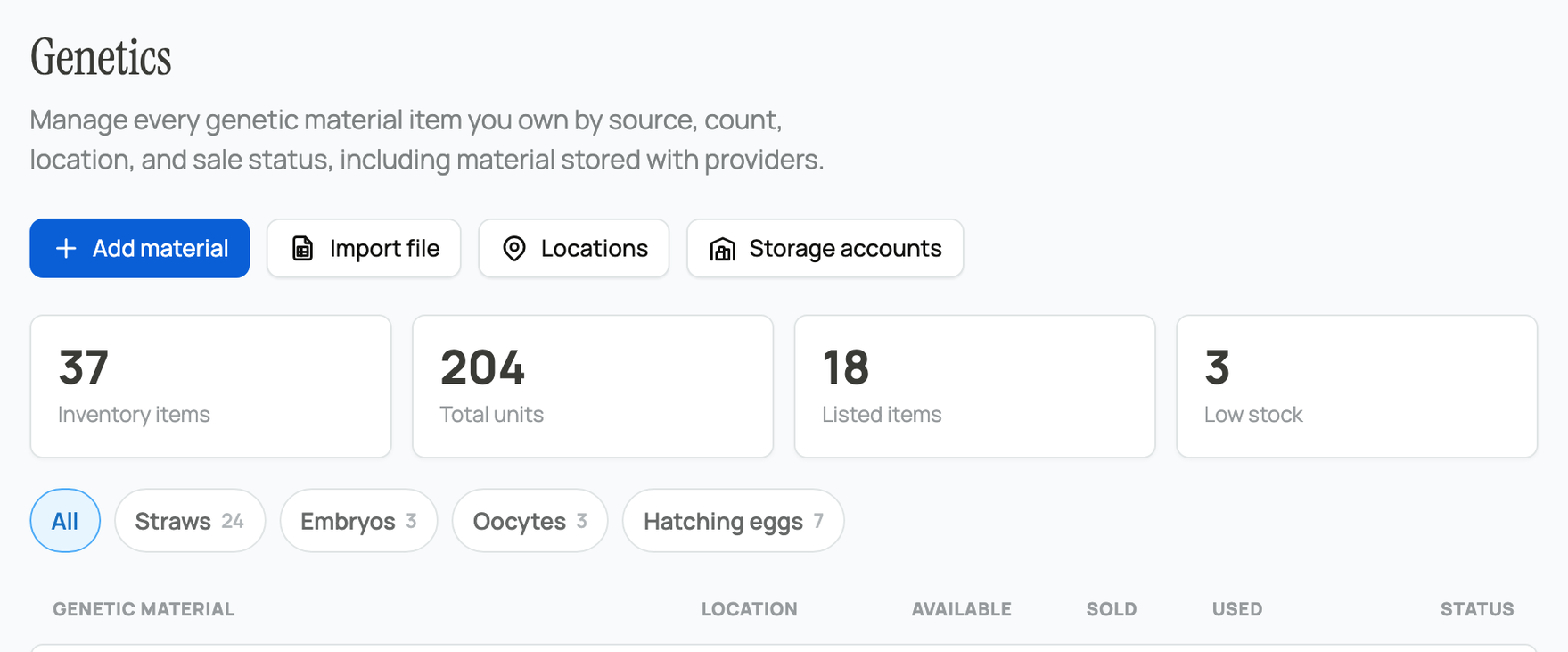
Use the actions at the top for different jobs:
- Add material records an item you already own.
- Import file brings in several existing records from a file.
- Locations organizes the places where you keep material.
- Storage accounts opens the providers storing material for you.
An inventory item holds the material type, preservation method, quantity, source animals, collection date, and optional physical location. Open an item when you want to record activity or list its available units for sale. Keeping this record accurate connects later sales, breeding cycles, pregnancies, hatches, and offspring to the right material.
Follow the available count
Open an item to see Available, Sold, and Used counts with its source animals and activity.
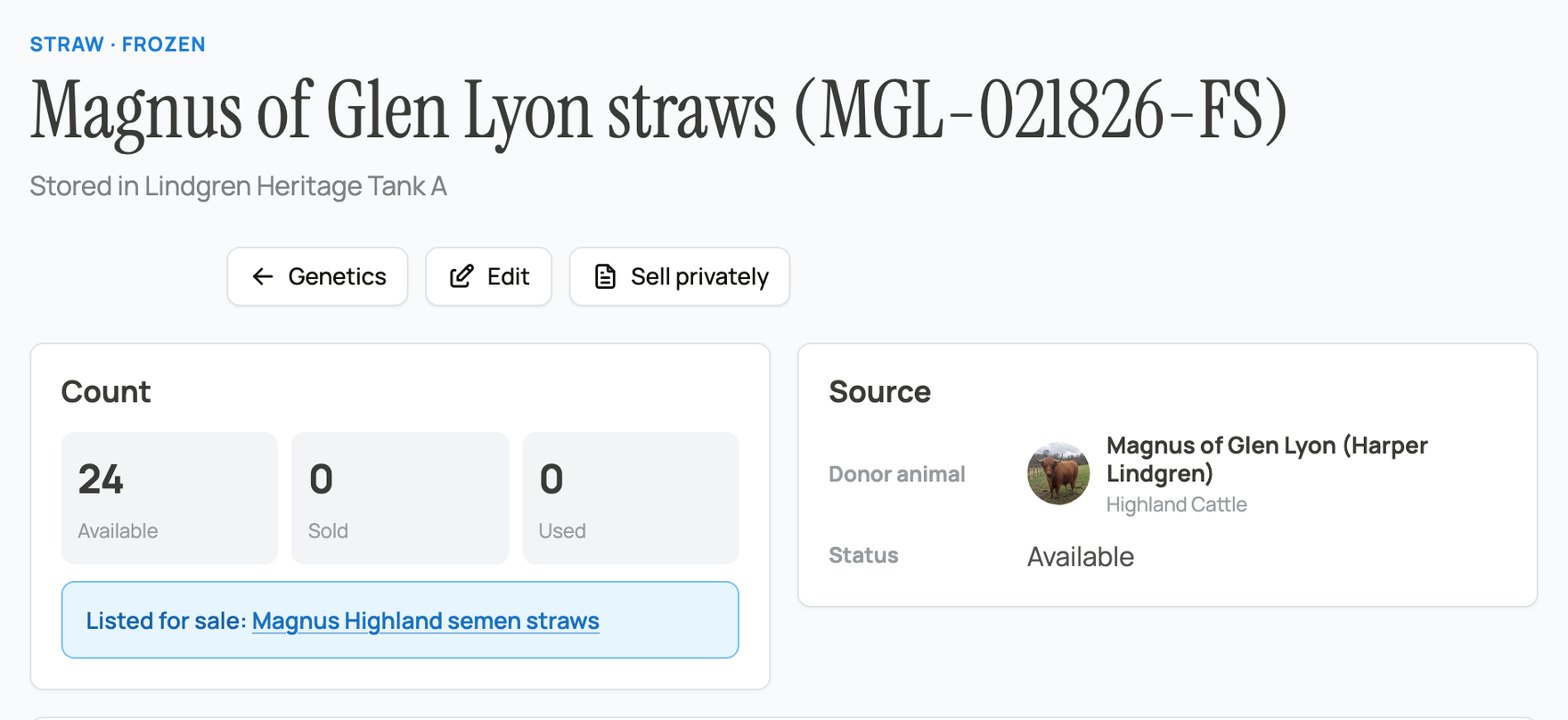
Available is what you can list, sell, or use now. A checkout can briefly hold units for a buyer, so held units are not available to someone else. Sold increases when you record an off-platform sale or a marketplace purchase completes. Used increases when you record a breeding, transfer, incubation, or another use.
Do not change the total quantity to stand in for a sale or use. Use Record sale or Record use so the count and history change together.
Choose the next guide for your task
- To add, organize, move, or combine material, use Managing your Genetic Inventory.
- To log an off-platform sale or breeding use, use Recording genetic sales and use.
- To sell publicly, use Listing genetics on the marketplace.
- To purchase material, use Buying genetics on the marketplace.
- To arrange delivery or resolve a problem, use Shipping and tracking genetic items.
- To compare providers or manage a storage account, use Subscribing to genetic storage.
For a short explanation of unfamiliar material, preservation, status, or container labels, see the genetics reference.
Updated on: 02/09/2026
Thank you!