
Sharing and embedding your bookable offering on your website
An active offering can be shared as a link, a button, or an embedded guest booking experience. Choose the option that fits where your audience already finds you, then test it once as a visitor before promoting it.
Open the sharing choices
Open Dashboard > Services > Bookings. Find the active offering you want to promote and select Share. The control is available only for active offerings; finish and publish a draft first.

Pick one option
- Direct booking link opens that one offering. Use it in a social post, email, message, or a website button that already exists.
- "Book now" button for your website provides a ready-made Book now on Creatures button for an editor that accepts HTML. Guests select it and continue to the offering on Creatures.
- Inline booking embed shows the guest booking experience inside a page on your own site. It is useful for a page that promotes one class, tour, or appointment.
- Raw iframe fallback is an alternative when your website editor blocks external scripts. It displays the same guest booking experience in a frame.
The inline and iframe options are for one offering at a time. A single embed that lists every offer is not available. For all current offers under one provider, share Your booking page instead.
Add it to your site
Select Copy beside the option you want. In your website builder, add an HTML or embed area and paste it there. Save or publish the page in the builder, then open it in a private browser window or on a phone.
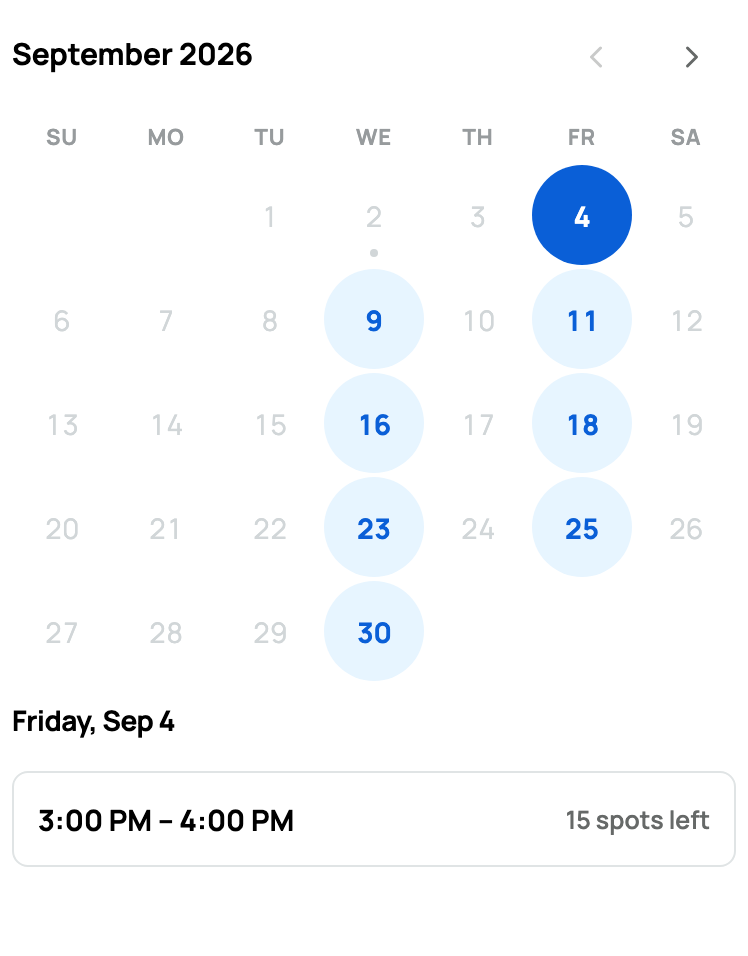
Check that the title, dates, and available times match the offer you intended to share. The embedded experience uses guest checkout: visitors enter their name and email, and their confirmation email provides the private booking link they need later. A signed-in member can still use the normal Creatures flow when they want account features.
What happens at checkout
The booking schedule, questions, agreement, hold, payment, confirmation, and cancellation policy still come from the offering you set up in Creatures. Update the offering when timing, price, or availability changes; you do not need to paste a new embed for every normal update.
Card payment opens secure checkout outside the embedded area. Free confirmation also leaves the embed for the Creatures confirmation page. Check the handoff after installing the embed; use a free offering if you want to test without a charge. If the builder cannot use either embed, use the direct link or the "Book now" button for your website instead.
For the public page that represents your whole business, see Your booking page.
Related information
- Your booking page: one link for everything you offer
- Creating a bookable offering: tours, classes, and appointments
- Taking bookings: schedule, check-in, promos, and the calendar feed
Updated on: 03/09/2026
Thank you!