
Recording genetic sales and use
Record a sale or use from the genetic item's detail page instead of editing its quantity. Creatures will update the available count and preserve a useful history of what happened.
Record an off-platform sale
Open the item from Genetics and find Record sale when the buyer paid outside the Creatures marketplace. Do not record a second sale for a purchase already completed through Creatures.
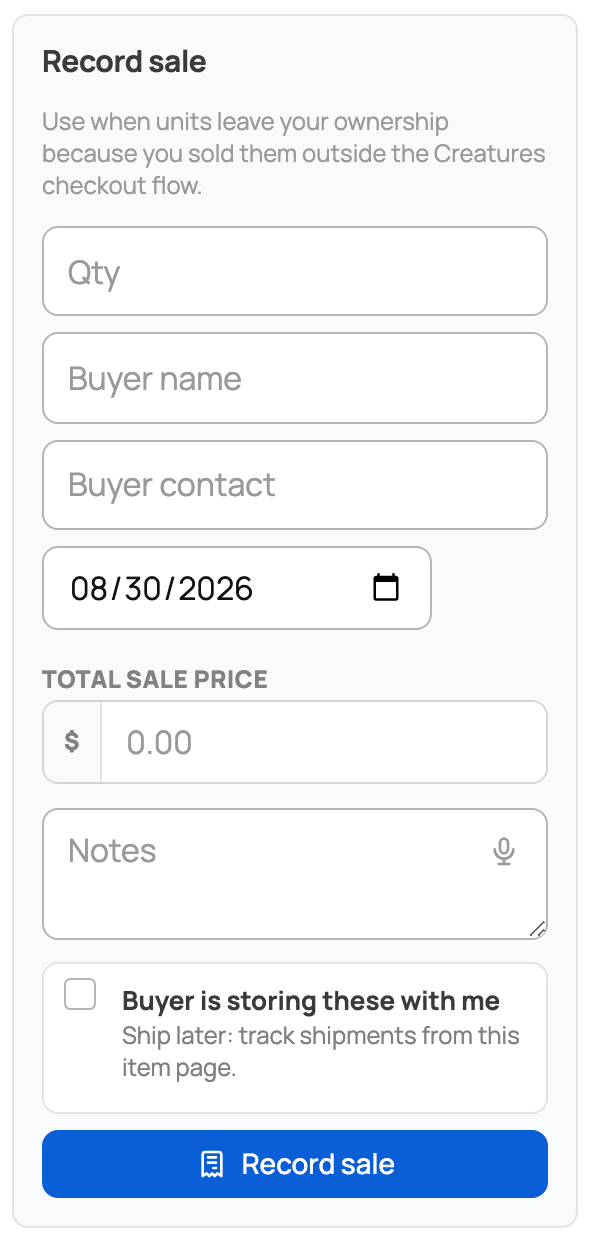
Enter the quantity and, when shown, Units from. Buyer name, contact, total sale price, date, and notes are optional. The date starts at today, so change it when recording an earlier sale. The price records the event but does not collect money. To add the income to your books, use Recording money in and out separately.
Turn on Buyer is storing these with me only when the buyer owns the sold units but you still physically hold them. Those units wait for shipment instead of being treated as already handed over. The shipping guide explains how to record a later shipment.
Select Record sale to move the units from Available to Sold. You cannot sell more units than are available outside active checkouts.
Record a use
Find Record use when material is consumed for breeding, embryo transfer, incubation, another procedure, or disposal. Enter the quantity, Units from when shown, date, type of use, and useful notes.
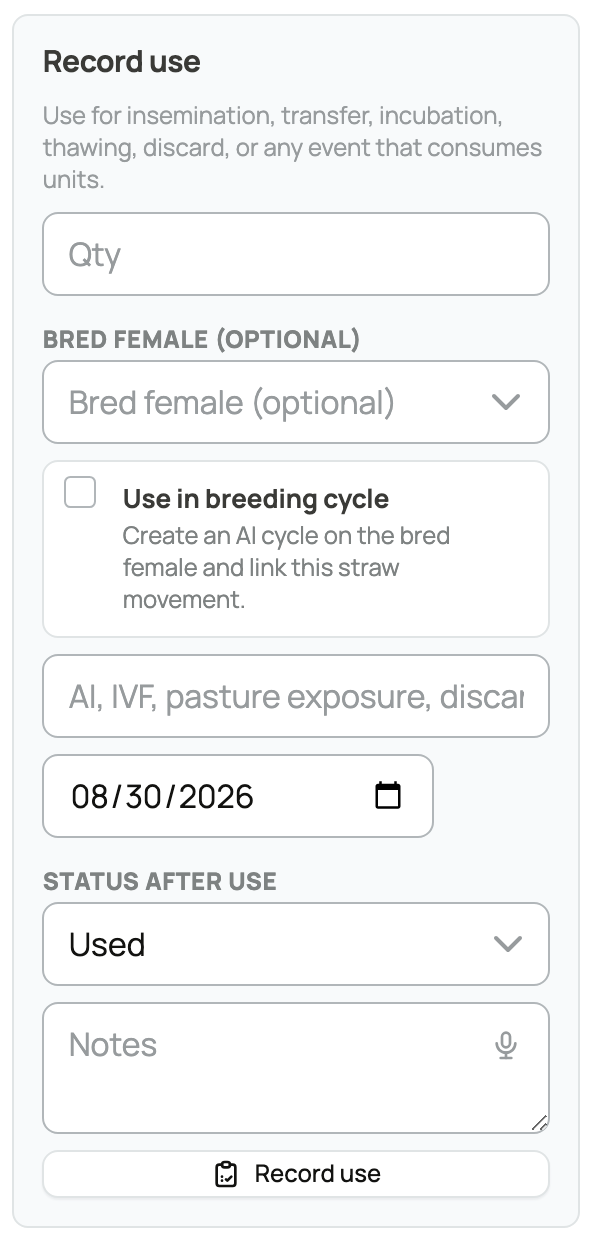
For straws, you can choose the bred female. For embryos, you can choose the recipient. When Use in breeding cycle appears, turn it on to create a linked breeding or incubation record. A bred female or recipient is required for that choice with straws or embryos.
Choose the Status after use that is true now. Embryos can be marked implanted, pregnancy confirmed, pregnancy failed, or live birth. Hatching eggs can be incubating, hatched, or failed to hatch.
Select Record use, or Use material and create cycle when linking a cycle. Saving reduces Available, increases Used, and records the activity. You return to the item's page.
If a count looks wrong
Check the item's activity first. If you logged a shipment by mistake for a sale marked Buyer is storing these with me, expand its shipment history and select Undo. This undoes the shipment entry, not the sale. For available units assigned to the wrong location, use Move units to move them back.
Contact Support for an incorrect sale or use. Recording another sale or use removes more units; it does not reverse the original entry. A checkout may also be holding units briefly. Purchased material cannot be sold or used until receipt is confirmed.
Related information
- Managing your Genetic Inventory
- Listing genetics on the marketplace
- Shipping and tracking genetic items
Updated on: 02/09/2026
Thank you!